My Long History with Music
I have a long history with music. It has been an intense relationship, touch-and-go sometimes, and it didn't lead to appreciable levels of musicianship—but it's always been there, a constant in my life. My soul cried out when I had to get to work and put music on the backburner. I guess I didn't have to. That might be something I'd change if I had to do it all over again. I'd start out the gate learning music, and I wouldn't stop for nothing or nobody.
NOTE: Some of this is text is lifted from other writings of mine which appear elsewhere, this is my comprehensive musical history.
Early Years
The stop-and-start nature of my relationship with music started early.
1984 Beatles and Beach Boys
UC Village. Called Married Student Housing back then in the '80s. When I was seven, I made friends with some kids across the courtyard, Tycho and his older brother Orion. Their parents were seismologists. They were also in a Beatles cover band, so of course their children idolized the Beatles. While we played Legos together, Orion played every Beatles album. He also liked to play the Beach Boys.
Much later Cathy and Mike changed their names to Anterra and Omaron, the "Twin Flames," moved up to Mount Shasta, and started a religion based on the stated integrity of their own relationship with each other. We used to get flyers for their retreats — there were different packages for guests on their property. Anyway.
1985 Gustav Holst and William Steinberg
When I was eight, I got The Planets by Gustav Holst with Also Sprach Zarathustra — the one with the sparkly, almost holographic LP jacket, the Boston Symphony Orchestra conducted by William Steinberg (b. 1899), 1971 Deutsche Grammophon. I didn't care much for the tone poem on side B. I just wanted to hear The Planets over and over again. I think I wore my father's needle out playing that record. It was the best Christmas present I've ever received — my first LP — because it sparked a lifelong fascination with music.
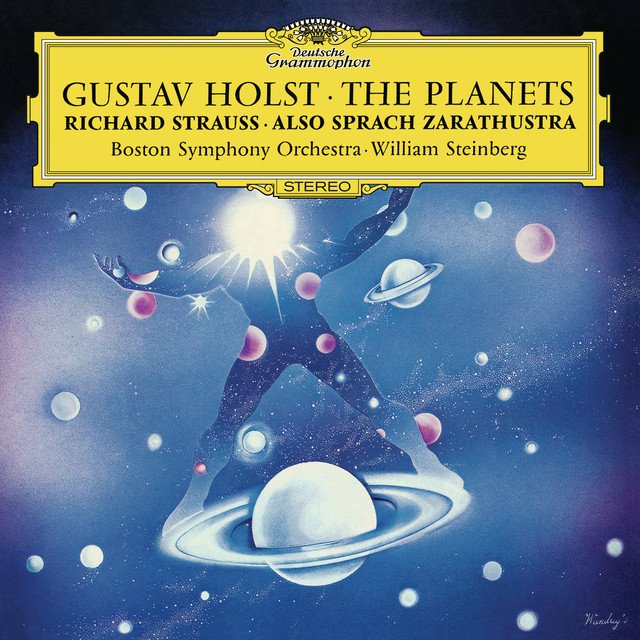
The Planets by Gustav Holst. Boston Symphony Orchestra, conducted by William Steinberg (b. 1899). 1971, Deutsche Grammophon.
1986 Piano Lessons that Didn't Take
When I was nine, we moved away from all my friends in the Village — from Albany up into the Kensington hills. Fog, a giant redwood sequoia tree in the front yard, a living room with a vaulted ceiling and a bay window completely taken up by that tree. Days and nights were often shrouded in fog up there. Somewhere in this stretch my parents put me in front of a piano, hoping something would take root. It didn't. I was a moody kid, I was upset that my parents moved away from all my friends, and wished they would save their platitudes.
1987 Frank Zappa and Father's Record Collection
My father kept a record collection that I raided the way other kids raided the fridge. He had six Zappa albums. My favorite was Uncle Meat, he was still in that phase of simultaneously exhalting and mocking the doo-wop music of his youth.
Fog and College Radio
The courtyard noise was gone in Kensington, and unfortunately so were my friends. In its place: trees, silence, mist. I turned to radio. By ten I was in the living room working the FM stations on an old JVC receiver, hunting for stations at hours when my parents were gone or when I should've been asleep.
My home was 90.7 — KALX Berkeley. In a single shift you could get dub from Jamaica, pulsing techno, dada sound collage, krautrock, noise, and post-punk. It was chaos with a program schedule.
Making Mix Tapes
My dad had a hi-fi system, and a dual cassette deck within it was like an altar to me. I'd clamp on his enormous 1970s aviator headphones and sit there for hours with a finger hovering over Pause and Record.
I'd grab stuff straight off the radio and splice it in next to songs from my dad's collection, learning sequencing and pacing. By high school I had a stack of these homemade mixtapes—about two dozen that made sense to exactly one person on Earth. Those tapes weren't just music to me — they were survival. I wish I still had them today—that would be solid gold.
1989 Band: Trombone Instead of Guitar
I distinctly remember asking my parents for a guitar in sixth grade. They got me a trombone. That was like asking for a slice of pizza and getting the box it came in. It was crazy. I had no interest in trombone. I was born in DC but I didn't grow up there, so I didn't have the appreciation for it I might have otherwise had. I knew three notes on the trombone. I pawned it for a hundred bucks when I hit high school and never looked back.
Adolescence
1990 Chick Corea and Return to Forever
My first cassette purchase, at thirteen years old, for a whopping $7.99, was Romantic Warrior by Chick Corea and Return to Forever — a tape I bought with my own money and played until the tape wore thin, not because I understood it (I absolutely did not), but because it was the only non-dubbed tape I owned, so I had no choice but to listen to it over and over until it gave up its secrets, or until I grew enough ears to receive them, which took years. Romantic Warrior is a remarkable record — the fusion of jazz virtuosity, synthesizer architecture, and harmonic ambition is unlike almost anything else from that era. Herbie Hancock's Sextant surpasses it fundamentally, because it asks a different question, but Romantic Warrior was, and still is, a fine album. What that tape gave me, though I couldn't have articulated it then, was a tolerance for complexity — a willingness to sit with music that didn't immediately resolve, to keep returning to something I didn't yet understand.
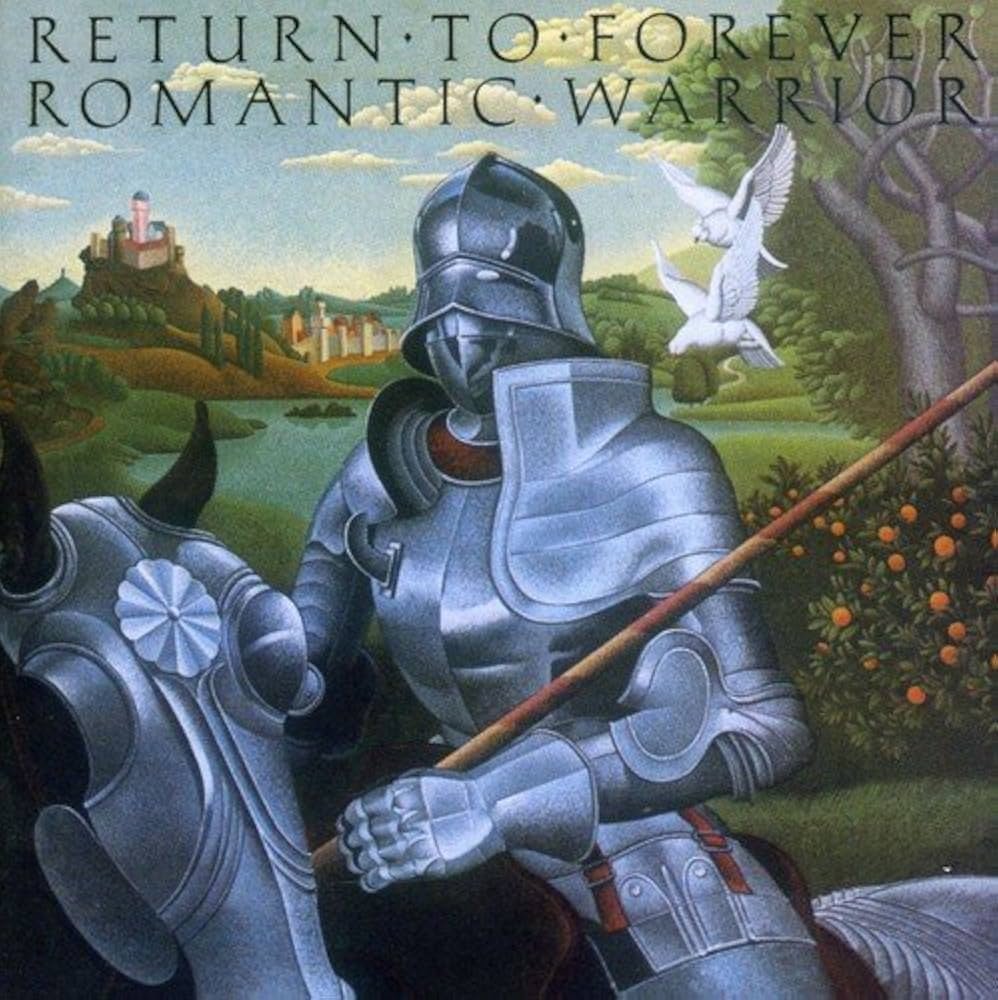 Romantic Warrior by Chick Corea and Return to Forever.
1991 Ministry and Front Line Assembly
I got tinnitus at my first punk show at age fourteen. The door was one dollar. Truly a place for the people. Perhaps influenced that first show, my second cassette purchase, was The Land of Rape and Honey by Ministry. I was embracing industrial music, especially Front Line Assembly. My first album by them was Gashed Senses and Crossfire and then some time later was my absolute favorite—Tactical Neural Implant. I had a friend Kai who was really into Skinny Puppy at the time (also featuring Bill Leeb), but I just didn't like it as much as FLA. It gave me post-apocalyptic visions of a future where humans were hunted by autonomous cyborgs. Cold, hard electronic music, and it suited my angst-ridden teen years just fine. My body was in the world but my mind was anywhere else — an escape to another dimension, a scary one. I've always peered into the darkness of the human soul, out of morbid curiosity I guess — maybe to shock my system, the same way some people like wasabi on their sashimi. It's really terrifying what we're capable of in large groups as a society. All this while the internet was gaining popularity — I'd seen The Terminator as a kid and the idea of it sent me reeling. I'd always suspected it was predictive. Ironically, and not heeding the warning, here we are decades later systematically bringing that grim, dystopian fiction into existence, so it seems.
A Conversation with Todd Rundgren
San Francisco, 1991. I'm fourteen, standing in the Exploratorium with my dad, watching Todd Rundgren explain digital recording to a room of audio nerds. For those who care about the specifics: the seminar was about MP3s and meta-tagging them, at a time when compact discs were brand new and the average hard disk held less than a hundred megabytes. It was forward-thinking, almost futuristic. Rundgren wasn't impressed with the technology for its own sake — he'd gone on the road to expound on the possibilities of digital music to an audience that still used the Yellow Pages every day. I think he did it because he was awestruck by the potential of something that just wasn't practical yet. Here we are with those digital files now, and the infrastructure to support them. Lucky us.
After the talk, he spent fifteen minutes talking to me. A kid. He didn't have to. I don't remember what we talked about — I remember how it felt. Like my questions mattered. Like I mattered.
1992-1995 Sproul Plaza Drumming Circle
I would drink with my buddy by the arcade in the ASUC plaza, yes there was an arcade, it was called "The Underground." Me and John Michael would play dominoes and drink at the picnic benches. We kept a snide commentary going about the passers-by, laughing at the names we made up for unsuspecting people. We'd sometimes yell them out. There was a large drumming circle with perhaps thirty participants happening in the plaza and I was always tuned in to it. Eventually, after a few games of dominoes I told John Michael I was going to stay and hang out with the drummers. He said goodbye and someone handed me a cowbell and a drumstick.
I couldn't keep time worth a damn, but it didn't stop me from trying. I was cautious and respectful, I played quietly until I found something that worked. I always tried to find a pocket, and I sometimes did. Being in the pocket was an exhilarating feeling but I couldn't hold on to it for long. I learned from some of the elders that this circle had been going since the '60s. It's long gone now, along with the arcade, most of the characters on the Ave and soul of Berkeley, I think the University of California is largely to blame. But it's also the times we're living in now. It's a different world today—argely for the worse. Anyway, I was eventually allowed to play a conga. I learned how to play to some extent. I learned guaguancó, a type of Cuban rumba, merengue, a traditional rhythm and dance from the Dominican Republic, and a few other rhythms that I have since forgotten. Those old guys were steeped in traditional rhythms, dances and songs from around the world. It broadened my perspective and appreciation for music.
You know, at Ameoba Music, the local record shop we frequented back then, the World Music section was a fraction of the size of the Metal section. I don't have a problem with metal music, I'm just illustrating the fact that there is so much more music in the world that is available. The actual output of World Music has got to be many times that of most popular genres because so many different kinds of music are represented. In most record shops it is relegated to a comparatively tiny area of the store, if at all.
I took a free class in People's Park on Afro-Cuban and Latin percussion. A few months later I bought myself a pair of congas. They were the cheapest I could find, Toca Players fiberglass congas, and a stand. I thought I was Tito Puente. Ha! I don't remember how I got to the Plaza with my congas when I didn't have a driver's license, I must've taken the bus. What a scene. My burgeoning alcoholism was overtaking my budding interest in music. Spoiler, music eventually prevailed but not for many years.
Get to Work, A 25-year Detour
Then came the day came when I traded my congas for a nailgun and air compressor. A formative decision.
Adulthood
1996-2000 Electronic Music Scene
Isolate Records and the 1990s Bay Area electronic music scene
There’s a whole chapter of my musical journey that I almost forgot to add, which is when I was nineteen there was this guy, Wei. He lived in the ground-floor apartment of his parents' apartment complex. Wei Chang was an accomplished electronic music artist, not much older than me. He had many hardware synthesizers, a Roland Jupiter 6, SH-101, TR-808, TR-909, TR-303, a Prophet-5 and many others. He was a rich kid, clearly. I mean, he also had a bimmer. All bought by his parents most likely. I didn't care, it was still the epitome of cool to me. To continue he had a Mackie mixer and a pair of KRK monitors that he always left cranked, with a little hot-signal distortion from the mixer. Sometimes he’d let me play the synths, punch in a sequence or manipulate the filter cut-off or resonance. I didn’t know what I was doing, but it was great fun.
He created music that was so grating, it was even more grating than the music at the punk club. It would make anyone's ears bleed. I was sure that it would clear the dance floor. I kind of appreciated that. Like, fuck what other people want to hear, just make music that Freddy Krueger would use to punish people in their nightmares. He played a few shows in San Francisco and I was his roadie. I got a taste of live sound, and I thought I was pretty tough from my construction jobs but lugging those PAs up six flights of stairs was no joke. Backbreaking work, and we were usually loading out at sunrise. We were frequent patrons at Denny's. I met Wei just before the independent electronic music scene exploded in the Bay Area. For a while it was just me and Wei. Before he became popular, we would talk for hours about music. His favorite act at the time was an experimental electronic duo from Manchester called Autechre. Though much of it was over my head at the time, he would talk to me about MIDI, sequencing, different cables, audio formats, performance techniques, and much more.
Other-world
In 2000, I found myself living in a small artist collective in a warehouse in West Oakland. The second warehouse that I had lived in. It was on Myrtle and West Grand an old Greyhound bus service warehouse, which had been disused for many years. I was there to design and build lofts. Which I did. Next-door to us was a large DJ collective who would occasionally throw big parties. The electronic music scene was white hot. So was the drug culture. I wasn't into drugs. Powders, pills, needles, anything in a glass pipe generally disgusted me, as did the people that took them. I could see the wreckage they left behind them. I was not good at self-reflection at the time, but I could sure point out other people's faults.
I wasn't impressed overall. Too many egos, too many drugs and drug-users. Too many sweaty bodies in an enclosed space. It was not my scene and I was trying my best to stay sober at the time. However, I did take note of some of the sounds and techniques used to create them.
2005 Drunken Blues and Harmonica
I was 28, and I was frustrated. I'd been working in construction for ten years without a promotion. I had stayed sober for about the same amount of time, and that wasn't rewarding either. I guess my life didn't get unmanageable during that time and that's it's own reward. At any rate, I found myself at the end of a long relationship and another dead-end job. I was walking by a music shop on Shattuck in Berkeley. It was the Starving Musician. On a whim, I went in and spent a good amount of time in there. I was trying to think what the most portable instrument would be. I walked out with three harmonicas. Hohner Special 20s. Really decent harps, I find they bend easier and are more forgiving than the Marine Bands. Maybe not as good as Lee Oskar or something. I found the Pub, Schmidt's Tobacco & Trading. I was drinking again. I was smoking my face off. I was laughing and feeling good. Finally. I made fast friends and they invited me over. When I stopped by the music jam a couple weeks later, they were impressed with my playing. They were inspired to form a blues band. It was me, Tommy and Noah at first. I forget the name of the bassist, did we even have one? We played a New Years party, and I drank so much I blacked out. We had a few other gigs before the other guys called it quits. I was in a blackout at every gig we played, so I can't tell you how that went—people told me I played well, but I don't know.
2015 Jenny and Jamming in Cover Bands
Once again I was busy. Life got in the way of music until I met Jenny. I don't know how it started. People just started coming over and playing music every week. I dubbed us the "Panamanics." For five years our friends came over—got as stoned as humanly possible—and played all the way through the same twenty or so songs for three hours. It was fun to play harmonica with them, and sometimes guitar. It was fun to hang out together. By the end of it though, I'd run away to our room, close the door and flop on the bed. I was frustrated with our lack of progress. There was no arrangement, no parts—everybody took a solo at the same time, all the way through the songs. I was starting to record them, and on playback it sounded like garbage. I came up with the idea to painstakingly make crib sheets with lyrics and chord shapes for our repretoire, I went to the copymat and made five copies of all the songs for us. The next time I saw them, our violinist said, "No real musician needs that." Something in me broke after that. We played music together, but it wasn't the same feeling. Jen came through and took Jenny, Sasha and Nakale away from us—girls only. Jen was the band leader for them, and they played her originals and some covers. They were called "Sagebrush Sally." The Panamanics carried on until the Pandemic.
Middle Age
2017 Guitar and Songwriting
During this time I was learning guitar on a coffee sunburst FG-700, listening to Warren Zevon, Jackson Browne and John Prine on vinyl. Some amazing songwriters. I was inspired to learn to play and sing. I was in a cover band, but I had the idea that it could turn into something more someday. I kept a skinny notebook in my guitar case where I'd write down song ideas. I was wearing western shirts and letting my hair grow—I was really playing the part too.
GarageBand: Coming Back to Recording
I've always had a strange dual fluency: deep in computers since the early Linux and BBS days, and deep in music since childhood, but for a long stretch those two things ran on separate tracks instead of converging. Around 2018, I borrowed my step-daughter's 2015 MacBook Air that her grandparents got her for school—she dropped out and she wasn't going back. I opened GarageBand and pressed record, and played a song I was working on. I played it back, hey! Something in me lit up. I was using the built-in microphone, my timing was off, and I was in a small untreated room—but it was magic. Somehow, all these years had gone by and I'd forgotten how much I loved to record. I bought a cheap interface, I think a used 2i4 and a bright and cheap condenser mic because I didn't know any better at the time, an AT2020 and a pencil mic also Audio Technica, I forget the model number.
Here's a song that survived three computer upgrades somehow, an original called Mind Over Madness, don't laugh, this was an attempt to make serious music using what I had at the time:
2019 Don't fear the REAPER
By this time I had started using something a bit more advanced than GarageBand to make recordings. It was REAPER, and it came with a steep learning curve, but there were thousands of how-to videos online. So I got to work and made it my business to learn every inch of the program. I can't say enough about REAPER, it's insanely flexible and stable. It can do anything audio-related that you need it to do. It has a small footprint.
 This was the fist iteration of my recording studio.
2020 Field Recording and Flight Paths
Early in the Pandemic, our music night friends (The Panamanics, Sagebrush Sally) all moved away (back to where they were from), bought houses and settled down. That suited me just fine. The Pandemic years suited me just fine. I was having a mid-life crisis. My construction career of 25 years was at an end, and I didn't have anything on the books. I was down in the mouth, and I didn't know what I was going to do next. I was so depressed I let my phone lapse, and didn't get it reinstated until the end of 2024. I didn't want to talk to anybody, I didn't want to see anyone. I checked out of social life.
I don't know how I first got the idea to make field recordings—maybe I was watching YouTube videos at night, romanticizing. Anyway, I bought a used Fostex FR2-LE field memory recorder on eBay for a hundred bucks. It's old-tech, and it was then too—from 2007, but I'd read that it had incredible preamps which gave recordings a spatial quality. I decided NOT to go with Zoom. I'd suffer the antiquated power supply and storage media—battery cage with AA's and CF card. And indeed, recordings made with it had that mystical 3-D quality: The noise floor is low and sources seem to have air around them, a bit of seperation. Jenny and I would pack a thermos and wool blanket and drive up to Tilden park with a splitter, couple pairs of headphones, the microphone, and the field recorder. I thought you needed an actual field to make a field recording. It was a good excuse to hang out with my loving partner, just us listening to birds and coyotes at sunset. Oh and air traffic every five minutes, sports cars, crying babies, obnoxious children, their obnoxious parents, the gravel beneath tires in the parking lot. I used to think it was quiet in the park until I tried recording nature sound in it. We only did it a few times because of all the noise. The recordists I'd seen in the videos were going to remote locations—far away from flight paths, and city noise. They made it look easy. If you're lucky, you live in a quiet place. If you're unlucky you have to travel. I don't live in a quiet place, and I didn't have the luxury of travel, so that was kind of a dead-end for me. I kept the recorder, and it turned out to be useful for other things, like making bootlegs of bands, location sound, sampling various noises to be put into songs.
 My janky field recording rig with improvised windscreen, and a cup of tea.
2021 Jenny Sings
Over time, Jenny surpassed me when it came to playing guitar. Her long, lithe fingers were so quick on the strings. She had the patience to put in the time to learn, and what she learned stuck. I think my brain pan must be made of hot teflon, and each lesson is a pat of butter—it just slides off. I don't know if I have a learning disability or if I'm just lazy. When it comes to some things, like learning an instrument, I just don't have the patience. Never did. I sometimes wish it was different, but then I love the simple act of recording a performance by someone else. Anyway, I started recording Jenny. She has great musical taste, a great voice and she can accompany herself on the guitar decently. The thing about Jenny is that she only enjoys playing cover songs, not originals for some reason. Make of that what you will. Our first song was More Than This by Roxy Music. I was blown away by her voice, her harmony and just natural musical aptitude. She picks up songs quickly. She can figure out how to play almost anything if you give her a little time.
Jenny covering More Than This by Roxy Music in 2021:
I had a cheap condenser and interface, and it does show: There are little pops and clicks in the audio that I tried to erase or reduce, but couldn't quite completely get rid of. The levels might not be perfect. I think Jenny may have even tried waving the mic around as she sang during some parts. I didn't totally know what I was doing—but I was making it work.
At the same time I was making my own electronic music. This is my original song Just A Mood, which was made with sounds entirely in-the-box, except for the harmonica. The song sounds a lot like Depeche Mode, and they were a definite influence. Just A Mood:
My recordings and my own music were two seperate things at this point.
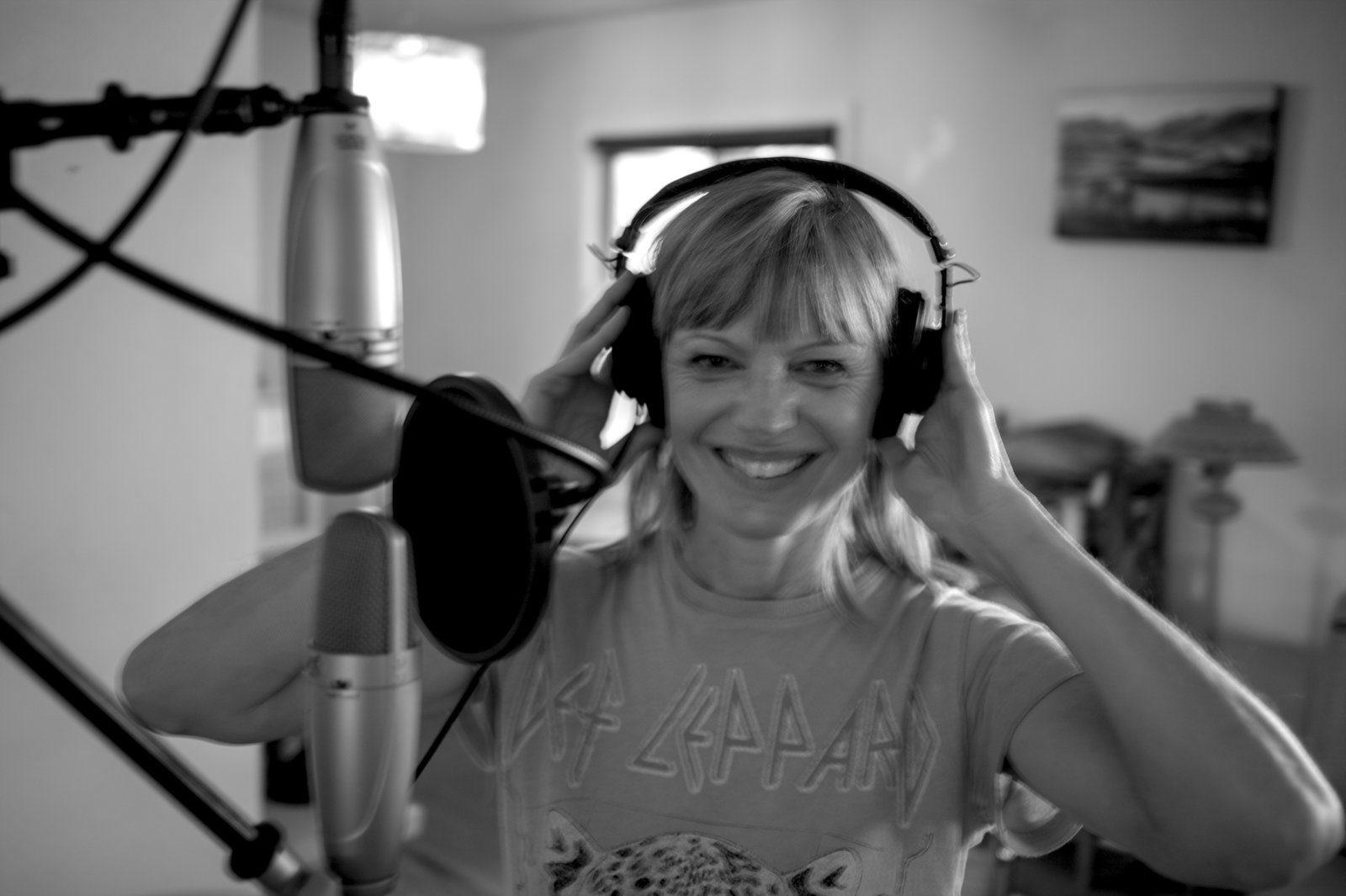 Jenny recording some overdubs. I'm not sure why I had the microphones in blumlein configuration. They are both multi-pattern mics and capable of it, it's just—why? I don't know, I guess I was excited to try new techniques. Every head movement was captured in pristine stereo for your listening enjoyment.
REAPER and MIDI
Because I was using REAPER, I had the flexibility to do lots of things. I figured I should experiment with synthesis and MIDI. You see, back in the early days of MIDI, there was a music to machine interface—newly invented but nobody had any music for it yet. Enter the MIDI file. Each MIDI file contains all the notes and timing information, but no audio. To get audio out of a MIDI file, you need to hook it up to a MIDI device—like a synthesizer, or use a "soft-synth" in your digital audio workstation. I took it as a sound-design challenge. I went on the Internet Archive and started digging around cached old sites from the 90s for MIDI file libraries... I found one, it was a couple gigs. I downloaded it immediately and began searching through it for familiar songs. One of the first things I searched for was Stevie Wonder—a childhood music idol of mine. My mother was always taking us to Alameda Flea Market, then Alameda Beach, then Fosters Freeze for dipped cones. Sometimes she'd take me to the fifty-cent matinee at the Grand Lake theater. Anyway, on our way to Alameda Beach one day, I heard this song on the radio and it cheered me up immensely. It was I Just Called To Say I Love You by Stevie Wonder. It's been a favorite of mine since then. I love Stevie Wonder.
My soft-synth and drum sample cover of I Just Called To Say I Love You by Stevie Wonder—with Rob Orsini on bass:
Digging around in that library of MIDI files I found lots of little gems, like Drive by the Cars. This is my synthesized, sound-designed version of it:
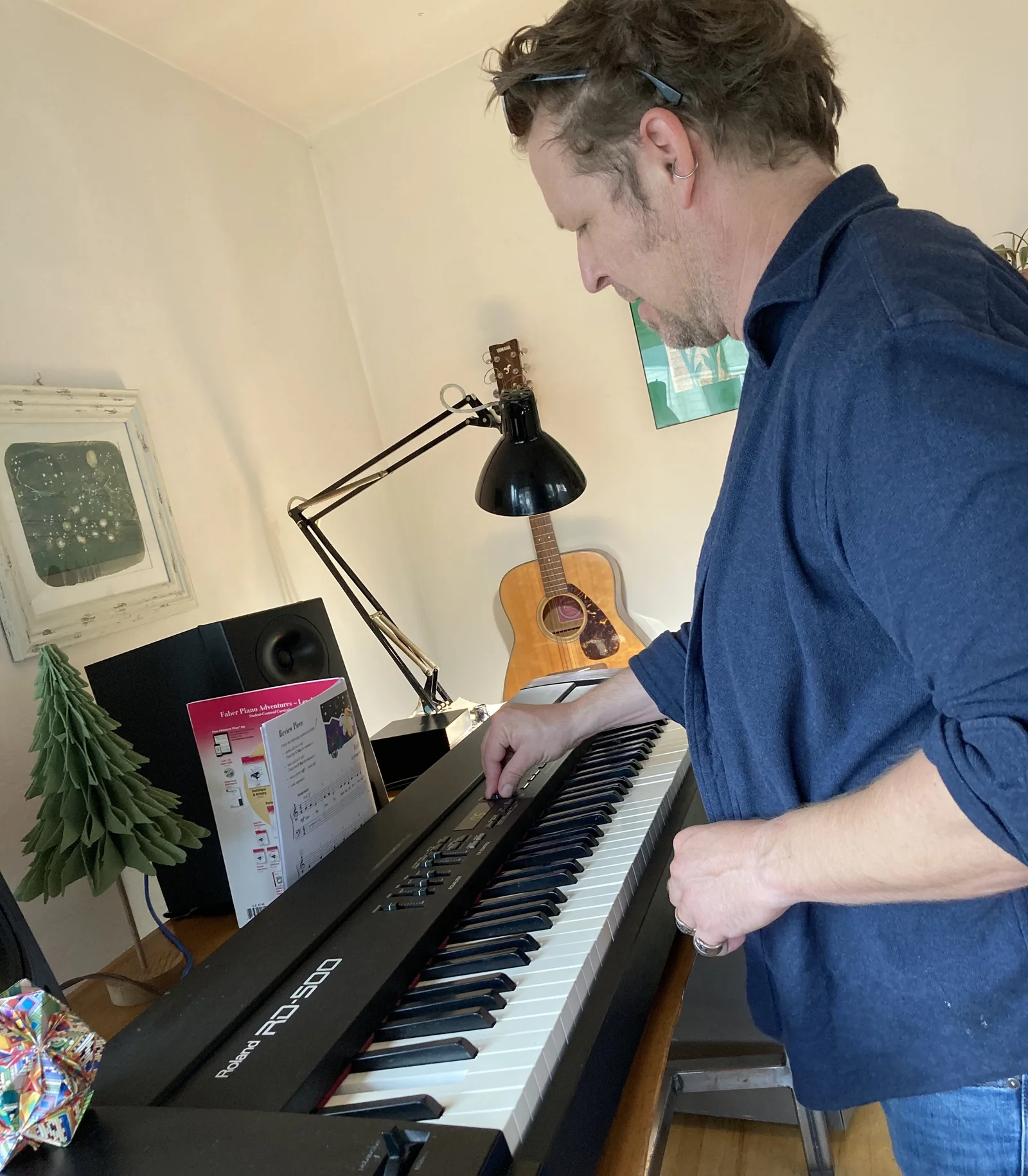 Me with my stage piano in 2022 or so. I was taking piano lessons during the pandemic, but they proved to be too expensive. I wish I never got rid of that thing though. I had two of them actually, one was cannibalized for parts to repair this one. It was a lot of work, and I sold it for a fraction of what my time was worth.
Jenny and MIDI Karaoke
I had all these moving pieces, now I just needed to put them together. This is my MIDI synth version of Holding Back The Years by Simply Red, featuring Jenny Brunswig on vocals. It took me over forty-hours to do the sound-design. I was learning, but also sound-design is a non-trivial task if it's done well:
I shared this track with an acquaintence at the bar, and he told me some weeks later that it was so smooth—he and his wife make love to it every night.
I never watched the movie, Philidelphia, but I know the message it contained. Bruce Springsteen wrote a hauntingly beautiful song for that film—which I heard he caught a lot of flack for. This is me and Jenny's synth cover of it. I first did all the sound design, then Jenny sang lead (she cried every time the song started and we had to do an unusal number of takes), she sang harmony, we did multiple harmony overdubs—I even sang harmony if you could call my singing that. Anyway, I buried my voice so it didn't ruin the recording. I also played harmonica toward the end:
So anyway, it's a fun challenge to put sounds to the MIDI files (which sometimes have twenty or more individual tracks). Jenny can sing anything, it's just a matter of finding songs that she vibes with. Fortunately, she has great taste—and a great voice. I know I'm a lucky guy to be in love with, to live with, and be able to record this beautiful songbird any time I want.
Revisiting Electronic Music
It was natural for me to get back into electronic music. I've made a fair bit of downtempo, ambient, and experimental electronic music. See Listen To My Music for examples.
2025 Recording The Pub Album
It's not ready for release yet, we have one more overdub (looking at you, Pascale) to do. Then I need to master the whole thing for streaming. The release will be streaming only—no downloads, because of the number of cover songs, and I don't want the upkeep of topping off mechanical licenses for each and every download in perpetuity.
2026 Starting a Recording Studio
All of that led me to where I'm at today. It took about forty years to get from a courtyard in UC Village to a studio in Richmond. I wasn't in a hurry, I thought I had forever. I got there anyway. Right on time.
On January 1st, I officially opened the door to Panama Sound.

The building that houses Down Home Music, Arhoolie Foundation, and Les Blank Films is two blocks away from me. I look at Chris Strachwitz's legacy with respect and a little bit of awe. He was a meticulous preservationist who had no pretensions. It took a German immigrant to notice American music, stand up and say, "This is worth recording and preserving for all-time." I feel that way about the East Bay. Clearly, there's an established music scene here, but I think there are under-recorded artists who are just too busy gigging to make it to the studio; or have a personal philosophy that puts them at odds with commercial studios in general—these are the folks who's back catalogs I would like to document. The work-a-day musicians with chops and originals who have just been too busy with life to make it to the studio.